Rosegarden
Audio editing software
- Features
- Ease of use
- Ease of management
- Quality of support
- Affordability
- Market presence
Take the quiz to check if Rosegarden and its alternatives fit your requirements.

Completely free
 Free Trial unavailable
 Free version

Small

Medium

Large

- Arts, entertainment, and recreation
- Public sector and nonprofit organizations
- Education and training
What is Rosegarden
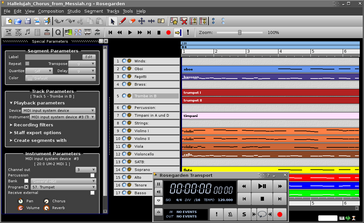
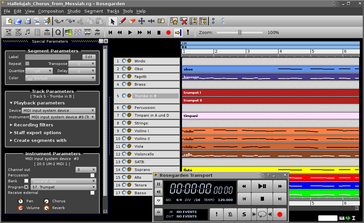
Rosegarden is an open-source music composition and audio/MIDI sequencing application for Linux systems. It is primarily used for arranging MIDI performances, editing notation, and sequencing with support for audio tracks via external audio backends. The product targets musicians and composers who want a DAW-style workflow with strong MIDI and score editing rather than AI-driven voice or cloud-based editing.

Strong MIDI and notation tools
Rosegarden includes a MIDI sequencer, piano-roll style editing, and a notation editor for score-based workflows. This makes it suitable for composing and arranging where note-level control matters. Users can move between performance editing and traditional notation without exporting to a separate scoring tool.
Open-source and vendor-neutral
Rosegarden is distributed as open-source software, which reduces vendor lock-in and licensing costs. Organizations and individuals can inspect, modify, and redistribute the software under its open-source license. This can be useful for Linux-first environments and long-term archival of projects, subject to file-format compatibility.
Integrates with Linux audio stack
Rosegarden is designed to work within common Linux audio setups (for example, using JACK/ALSA depending on configuration). It can fit into workflows that rely on external synths, plugins, and routing tools available on Linux. This is helpful for users building modular audio/MIDI pipelines rather than relying on an all-in-one cloud editor.

Limited modern audio editing
Compared with dedicated audio editors and newer creator-focused tools, Rosegarden’s audio editing capabilities are not its primary strength. Many workflows still rely on external tools for detailed waveform editing, noise reduction, or dialogue-centric editing. Users focused on podcast-style editing or transcription-based editing may find it less suitable.
Linux-centric availability
Rosegarden is primarily built for Linux, which can limit adoption in mixed OS teams. While some users may attempt to run it through compatibility layers or alternative builds, that is not the typical supported path. This constraint can complicate collaboration when collaborators use Windows or macOS-first audio tools.
Workflow and UI feel dated
The interface and workflow reflect a traditional DAW/MIDI sequencer design and may feel less streamlined than newer tools. Setup can require familiarity with Linux audio configuration, which adds onboarding time. Users expecting cloud collaboration, AI voice features, or automated editing will need additional software.
Plan & Pricing
| Plan | Price | Key features & notes |
|---|---|---|
| Free / Open-source | $0 | Downloadable Linux music composition & editing application; available as source code and distribution packages (flatpak, distro packages, SourceForge). No paid tiers, subscriptions, or commercial plans listed on the official site. |