Odoo
ERP systems
- Features
- Ease of use
- Ease of management
- Quality of support
- Affordability
- Market presence
Take the quiz to check if Odoo and its alternatives fit your requirements.

US$31.10 per user per month
 Free TrialFree version

Small

Medium

Large

- Accommodation and food services
- Retail and wholesale
- Arts, entertainment, and recreation
What is Odoo
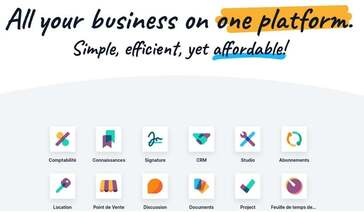
Odoo is a modular ERP suite that combines core business functions such as accounting, sales, purchasing, inventory, manufacturing, and HR in a single platform. It serves small to mid-sized organizations and divisions that want an integrated system with the option to start with a few apps and expand over time. Odoo is available as a cloud service and for on-premises deployment, with both a community (open-source) edition and a commercial enterprise edition. It differentiates through its large catalog of integrated applications and its extensibility via modules and APIs.

Broad modular ERP coverage
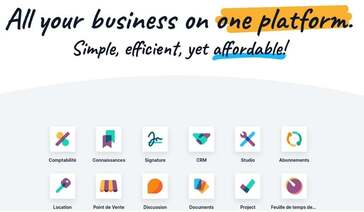
Odoo provides a wide set of integrated applications spanning finance, CRM, inventory, manufacturing, project management, and eCommerce. Organizations can implement only the modules they need and add more as requirements grow. This modular approach can reduce the need for separate point solutions and custom integrations for common processes.
Flexible deployment options
Odoo supports cloud hosting (including Odoo Online and managed hosting) as well as on-premises deployments. This flexibility helps organizations align with data residency, security, and IT governance requirements. It also enables phased migrations from legacy systems where a full cloud move is not immediately feasible.
Extensible via modules and APIs
Odoo includes a large ecosystem of add-ons and supports customization through its module framework. It provides APIs that enable integration with external systems and custom applications. This can be useful for companies with industry-specific workflows that require tailoring beyond standard ERP configurations.

Customization increases complexity
While Odoo is highly configurable, extensive customization can introduce upgrade and maintenance overhead. Custom modules may require refactoring when new major versions are adopted. Organizations often need experienced implementation partners or in-house developers to manage complex deployments reliably.
Edition and feature differences
Capabilities differ between the Community (open-source) and Enterprise editions, and some features require paid licensing. This can complicate early product evaluation if requirements map to enterprise-only functionality. Buyers typically need to validate which modules, hosting model, and support level are included in the chosen plan.
Global compliance varies by locale
Accounting, tax, payroll, and regulatory requirements can vary significantly by country and industry. Odoo provides localization packages, but coverage and maturity can differ across regions and may require partner solutions. Organizations with complex multi-entity, multi-country compliance needs should validate statutory reporting, audit trails, and controls in their target jurisdictions.
Plan & Pricing
| Plan | Price | Key features & notes |
|---|---|---|
| One App Free | $0 — One app, unlimited users (Odoo Online) | One app free forever; unlimited users; Odoo Online. (Start now). |
| Standard | US$31.10 per user/month (billed annually) — US$38.90 per user/month (monthly) | All apps included; Odoo Online hosting; includes unlimited support, hosting, maintenance and upgrades. Annual discount note applies for initial users. |
| Custom | US$61.00 per user/month (billed annually) — US$76.20 per user/month (monthly) | All apps included; Odoo Online / Odoo.sh / On‑premise options; includes Odoo Studio, Multi-Company, External API. Odoo.sh hosting cost not included. |
Seller details

Odoo S.A.

Ramillies, Belgium

2005

Private

https://www.odoo.com/

https://x.com/Odoo

https://www.linkedin.com/company/odoo/